
 504-456-3610
 CALL US NOW
 EMAIL US NOW
Through The Jury System

I love Glenn and all of the people in his office. He’s helpful, professional and cares about each client. He works painstakingly to make sure each client is represented to the best of his ability…



Experienced Personal Injury Lawyers From Metairie, Louisiana Providing You With The Staunch Representation Needed to Win Your Case

With family members and other loved ones depending on you to make a full recovery, it can be more stressful than you can imagine having to deal with an injury. Filing an injury claim can go a long way towards restoring a semblance of normalcy in your life and getting you the compensation you need to not only recover from your injuries but prosper going into the future. However, filing an injury claim alone can be overwhelming and confusing, at first. A personal injury attorney like the ones on our team at The Law Office of Glenn C. McGovern can provide you the support you and your family need to get back on your own two feet. Our track record handling personal injury cases speaks for itself. If you are in Metairie or surrounding areas, give us a call at 504-456-3610 today.
How Can We Help?
If you have legal questions, we can help. Let our team provide the guidance you need to move forward.


Are Personal Injury Attorneys Worth It?
If you end up hiring an experienced and tested attorney that has a track record of getting results, hiring an attorney may be more than worth it. In general, injury claims require proof of negligence by another party and proof of the damages you are claiming. Combined, it can be difficult to prove both effectively in order to get the most compensation possible for your case. This is where an injury attorney is the most effective. By investigating your claim and utilizing the information and evidence they have uncovered, proving negligence and damage can be a breeze compared to if you went at it alone. The compensation you deserve may only be a phone call away. Contact our law firm today to get started on your injury claim.

How Do I Choose A Personal Injury Lawyer?
Focusing on the track record of a law firm can sift out other less-experienced lawyers. Some law firms offer a wide array of practice areas, but it is important to consider a law firm that focuses primarily on personal injury claims. With years of experience under our collective belts, injury victims rely on us to get them the results they need to get back on track with their life plans. Victims that have suffered injuries in an accident may find that their circumstances have become majorly disrupted. From finances to physical and mental health, no area of your life is safe from being affected by an accident. Law firms like The Law Office of Glenn C. McGovern take matters like these seriously. We are dedicated to protecting injury victims’ rights and do everything in our power to get them the compensation they deserve. Reach out to our law office today to see how we can help you with your case.

How Do I Protect My Civil Rights?
The police are sworn to serve and protect us all in our communities. In my over 44 years of handling civil rights police cases, I have learned that due to system failures, a few officers fail to serve and protect certain citizens. There is a systemic problem in the United States of excess force being used on citizens every day across the land. The numbers of citizens maimed or killed speak for themselves, especially when you see the numbers of citizens shot to death in other countries. Much of this is due to improper and inadequate training as discussed in this book.
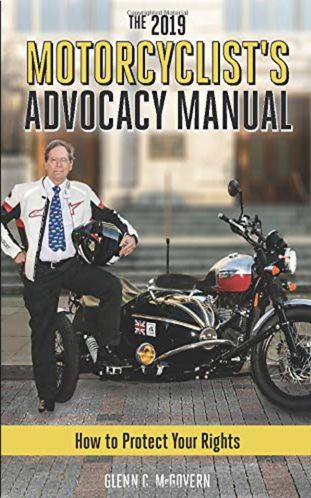
Do You Want To Learn More From Glenn C. McGovern?
Glenn C. McGovern has been practicing law for over three decades. In that time, he has represented thousands of clients, including victims of motorcycle accidents. In his free book, Glenn McGovern gives you insight into the laws and regulations put in place for motorcyclists in Louisiana, and around the country, to ensure their rights are protected on the open road.
Frequently Asked Questions

When Should A Personal Injury Lawyer Be Used?
If you are unsure if you should hire a personal injury attorney, you should contact one to see if your case has any merit going forward. Our law office provides prospective clients with a free consultation to analyze the specifics of their case without a need for commitment. We understand the difficulties you may be experiencing and we want you to know we are on your side. A major hurdle with injury claims is having to deal with insurance companies. The insurance company on the other side of your injury claim is incentivized by giving you a low settlement offer and delaying your case, in general. We can take on insurance companies to ensure they treat you fairly and effectively. Contact us if you are in Metairie if you’re on the fence about filing a claim.
Resources & Insights

What Should I Do After A Hit And Run?...
Read More

Uber Accidents: What You Need To Know...
Read More

How Can I Stay Safe Driving On Slippery Roads?...
Read More

How Does Returning To Work After An Accident Affect...
Read More

Can I Still Get A Settlement If I Wasn’t...
Read More

How Can The Law Office of Glenn C. McGovern Help Me?
The Law Office of Glenn C. McGovern can be found roughly 15 minutes away from City Park, less than 5 miles away from Lafreniere Park, and about 10 miles away from The University of New Orleans East Campus. Louis Armstrong New Orleans International Airport (MSY) is nearly 15 minutes away from our law firm. Whether you live in Metairie or near a surrounding area in Louisiana, we can help you with your personal injury case today. Drop by our law office or call us at 504-456-3610 or 800-721-3992 to schedule a free consultation with our team.

Join us on October 22 for a RIDE FOR LONNY ROMERO
When: Saturday, Oct 22, 202209:00 AM – 03:00 PM
Location: Cajun Harley-Davidson
724 I-10 South Frontage Rd.Scott, Louisiana 70583
For more information click here

 2901 Division St #201
 504-456-3610
 lawoffice@glennmcgovern.com


